

LaingBuisson Private Acute Healthcare & Cover Conference 2026: Key Trends and Takeaways

Private healthcare is growing. Is the sector ready for what comes next?
The sell-out LaingBuisson Private Acute Healthcare & Cover Conference 2026 brought senior leaders from across independent healthcare, insurance and the wider sector together at BMA House, London, on 8 October.
A common theme ran through the day’s presentations: demand for healthcare is changing, while the pressure on providers to deliver more accessible, connected and efficient care continues to grow.
The challenge: demand is growing, but it isn’t growing uniformly
The long-term picture for private healthcare remains one of significant demand.
IHPN research presented by David Hare showed 71% of people would consider using private healthcare, up from 63% three years ago, while four in ten expect to go private in the next 12 months. Difficulties accessing NHS care remain the biggest reason for doing so.
However, Ian Gargan of PHIN provided important context. Private admissions reached 247,000 in Q1 2026, broadly level with the record Q1 2025. Beneath that headline, insured admissions declined while self-pay reached a new high, with self-pay admissions increasing by 9% while insured admissions fell by 2%. The shift was particularly evident among older patients, with people aged over 60 accounting for around 60% of self-pay growth. PHIN data also showed significant variation between specialties, with cataract procedures continuing to grow strongly while activity in other areas has softened.
Healthcode’s data also points to sustained growth in activity, with invoice volumes rising from 8.6 million in 2022 to 11.8 million in 2025, and a further increase to around 12.7 million forecast for 2026.
The message is clear: providers cannot simply plan for “more private healthcare”. They need to understand where demand is moving and build services accordingly.
The challenge is bigger than the private sector
Another recurring theme was how independent healthcare can work alongside the NHS.
Dr Rob Findlay’s session focused directly on reducing NHS waiting times, highlighting that much of the waiting list sits within outpatient and diagnostic pathways. His conclusion was unequivocal: the NHS still needs independent-sector support, alongside improvements to digital referrals and patient choice.
That creates an opportunity, but also an operational challenge. Delivering capacity across NHS, insured and self-pay pathways requires organisations to manage increasingly complex patient journeys without adding unnecessary administrative burden.
The solution: technology that removes friction, not adds to it
This was a particularly relevant insight during the technology discussion chaired by Streets Heaver CEO Benedict Heaver. 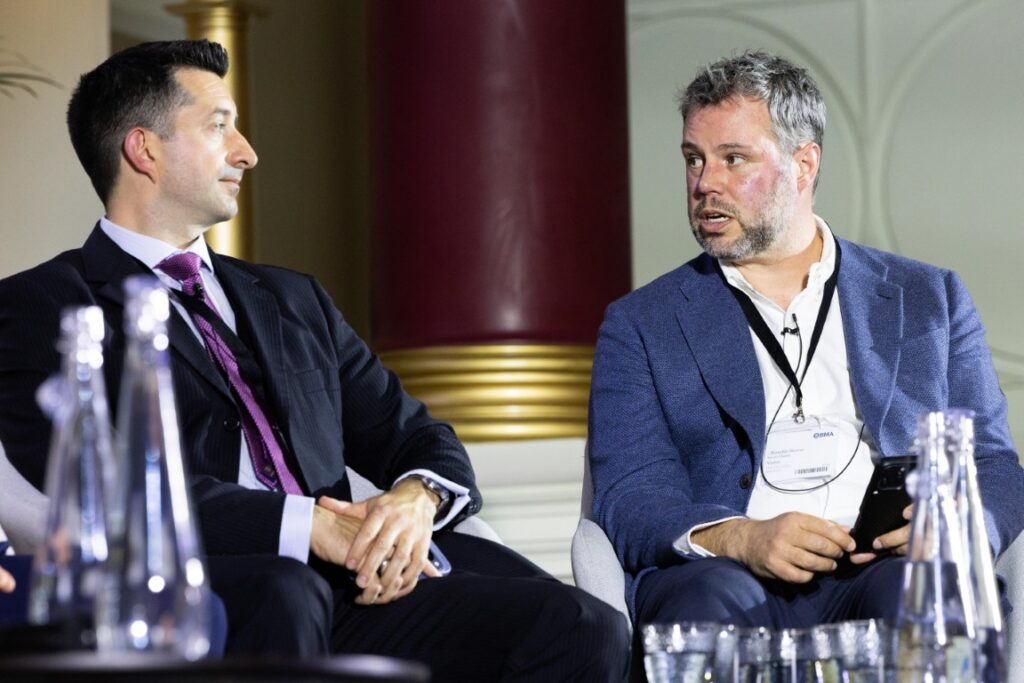
Across the conference a common technological theme emerged: digital transformation has value when it connects fragmented parts of the patient journey.
Affidea, for example, presented its move towards integrated pathways supported by digitalisation, longitudinal patient records, AI workflows, patient engagement and decision support. The organisation argued that fragmentation remains a significant challenge for patients, with research suggesting that 72% of London patients would prefer to access as much of their treatment as possible under one roof.”
Healistic demonstrated the same principle from another angle, focusing on closing the gap between digital prescribing and medication fulfilment. The company highlighted growing challenges around medicines access, with 49% of UK adults reporting difficulties obtaining prescriptions in the past two years and 87% of pharmacy staff experiencing daily supply issues.
The opportunity for health tech, therefore, is not technology for technology’s sake.
It is technology that helps providers connect services, reduce administrative friction, make better use of data and create capacity for care. One example showed an AI coding agent reducing an administrative process from around 20 minutes to just 30 seconds, illustrating how technology can increase activity without a corresponding increase in cost.
As the sector continues to evolve, the organisations best positioned for growth will be those that can turn increasing demand into sustainable, joined-up patient pathways.
That was perhaps the most important takeaway from the LaingBuisson Private Healthcare & Cover Conference 2026: healthcare doesn’t simply need more capacity. It needs smarter ways to use it.